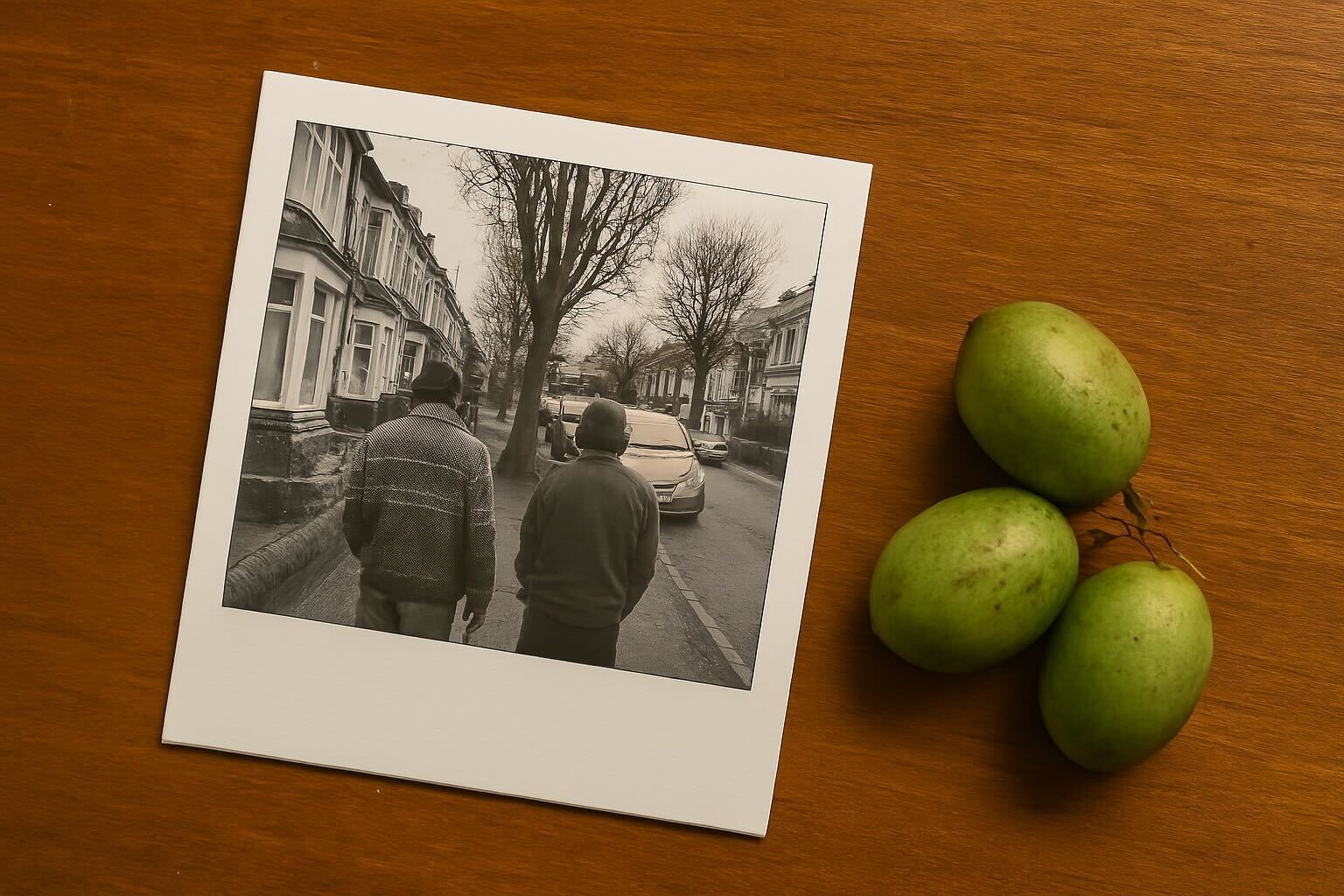
Festival of Live Digital Art (FOLDA) is back in Kingston, June 4-7. Produced by Spiderweb show performance, its mission is to empower the global community with boundary-pushing live digital artistry that transcends barriers and inspires profound connections.
FOLDA’s Director of Artistic Outreach, Marcel Stewart is bringing Windrush to Kingston’s Broom Factory for two shows on Wednesday June 4 and Friday June 6. Windrush journeys “through the intertwined lives of three generations, navigating the complexities of identity, belonging, and legacy. Set against the backdrop of the Windrush era, the story unfolds in Jamaica to England and ends up in Canada, capturing the vibrant and tumultuous experiences of those who moved in search of better opportunities.”
Read below to learn more about Stewart, what this show means to him and what he hopes audiences will take away from the experience.
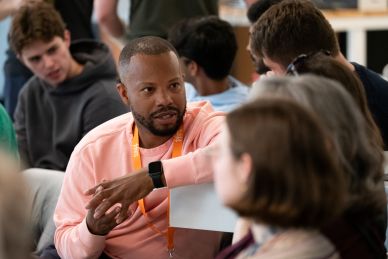
1.First, tell me a bit about yourself, Marcel?
Argh, this question always makes me feel like I’m at a job interview, so i’ma do my best to skip the resume talk. I was born in Bristol, England which for most of my childhood I truly thought was the Blackest place on the planet. Both sides of my family came to the UK from Jamaica as part of the Windrush generation. I grew up around dreaded uncles named Clifton and Hedley and aunties named Velma and Paulette. I learned to communicate by watching my grandparents, Eva and Herbert Brown, bicker across the dinner table about why Diana was too good for Charles.
Bristol has deep ties to the transatlantic slave trade and was thick with racial discrimination. The 1980s riots in St Pauls shaped my parents’ decision to move us to Canada in 1990. From there, I bounced from Scarborough to Mississauga to Brampton. My imagination was built on obsessing over dinosaurs, Arthur, Darkwing Duck, Today’s Special, and Monday Night Raw. When I wasn’t working on my People’s Eyebrow or perfecting my jump shot, I was deep in music: Mobb Deep, Nas, Wu-Tang, Brandy, Whitney, Bob, Prince, Michael, Tina, Sister Nancy. All of that (and more) lives in my work. Now, I’m a father to two little humans named Otis and Rowan. Parenting is no joke. It’s the only school where the tests keep getting harder, even when you know the subject inside out.
2. Share a little about Windrush and why you’ve chosen to bring it to Kingston for a second year in a row?
Last year was a conversation that included a teeny tiny performance. I shared space with Oonya Kempadoo, and we explored our creative and cultural connections while talking about our respective projects. This year, I’m actually presenting a version of WindRush. It’s evolved a lot since I started it in 2021. It began as a traditional theatre script inspired by a conversation with my mom. She’d seen Trey Anthony’s How Black Mothers Say I Love You and said, “You should write something called How Black Fathers Say I Love You, because they don’t.” Yeah, she said that. And she wasn’t wrong. I grew up surrounded by Black men who didn’t use those words, even if they loved hard. So the project started as a story about a young boy in Jamaica, shaped by the love of an elder. Then we meet him in England, navigating manhood in a place built to make him feel small. Finally, we see him at the edge of his life in Canada, reflecting on the relationships he broke, the grief he buried, and the love he withheld. Bringing in my collaborator, Lisa Karen Cox, changed everything. She saw that the story had heart, but the structure didn’t. She pushed me to find a better container for it. That led us to this conceptual concert-album hybrid that lives in a space between theatre, hip-hop, spoken word, and memory. We’re experimenting with projections, liveness, binaural sound. What does it mean to be present in the room? What does it mean to disappear? We’re still figuring it out. We’ve assembled an Avengers-level array of artists (Nazerah Carlisle, Stage Manager/Samay Arayas, Projection Designer/Miquelon Rodriguez, Sound Designer). We’re being playful, ambitious, gentle, and risky all at once. What you’ll see in Kingston is a prototype.
3. For those unfamiliar, can you share the significance of the Windrush era and how you feel it shaped your own familial history?
Facing a massive labour shortage after World War II, the British government invited over half a million immigrants from Caribbean countries like Jamaica, Trinidad, and Barbados. The first group arrived in 1948 on a ship called the HMT Empire Windrush. These folks were invited to rebuild the country and were told they belonged. Until they didn’t. Many of them, including my family, arrived as children on their parents’ passports. For decades, they worked, paid taxes, raised families, but were never officially given citizenship. Then came the immigration crackdowns and the Windrush scandal. People who had lived in the UK for most of their lives were suddenly being deported or denied healthcare, housing, and employment. That betrayal rippled across generations. The trauma and resilience of that generation shaped my parents, and in turn, shaped me.
4. As someone with Jamaican heritage, I love the idea of sharing stories of our ancestors. Please share what this means to you?
If we’re living on Turtle Island – this land soaked in blood, taken through colonization and genocide – then Afro-Caribbean people need to know where we’ve been to imagine where we can go. We are more than slavery, despite what the school system might say. To me, that means our possibilities are endless. We don’t need to prove ourselves or conform. We can just be. We can love. We can rest. We can dream so big the world feels too small to hold us.
5. What do you hope the audience will take away from the show?
That Black men deserve love too.
Not just loyalty. Not just reverence. But real love. Messy, unfiltered, say-it-out-loud love. The kind our fathers didn’t know how to give, but maybe we can learn how to offer. I want the audience to sit inside that complexity. I want them to see tenderness where they expect toughness. To see what love looks like when a father can’t say “I love you,” but folds a napkin and wipes his child’s face instead. When a brother misses a funeral, not out of carelessness, but because he’s afraid the grief might break him. WindRush is about memory, masculinity, and migration. This show doesn’t offer answers. Hopefully people leave imagining what healing could like if we allow ourselves to let softness in.
6. Anything you’d like to add?
Peep the link my convo with Oonya from FOLDA 2024 –
 KEEP UP WITH KINGSTON